THE THINKER ARCHILOGS
CHRISTOPHER DAVID NG MAN KING
ARCHITECTURE DESIGN STUDIO 2 (ARC 1126)
PROJECT 1: FAMOUS PEOPLE, FAMILIAR FACES


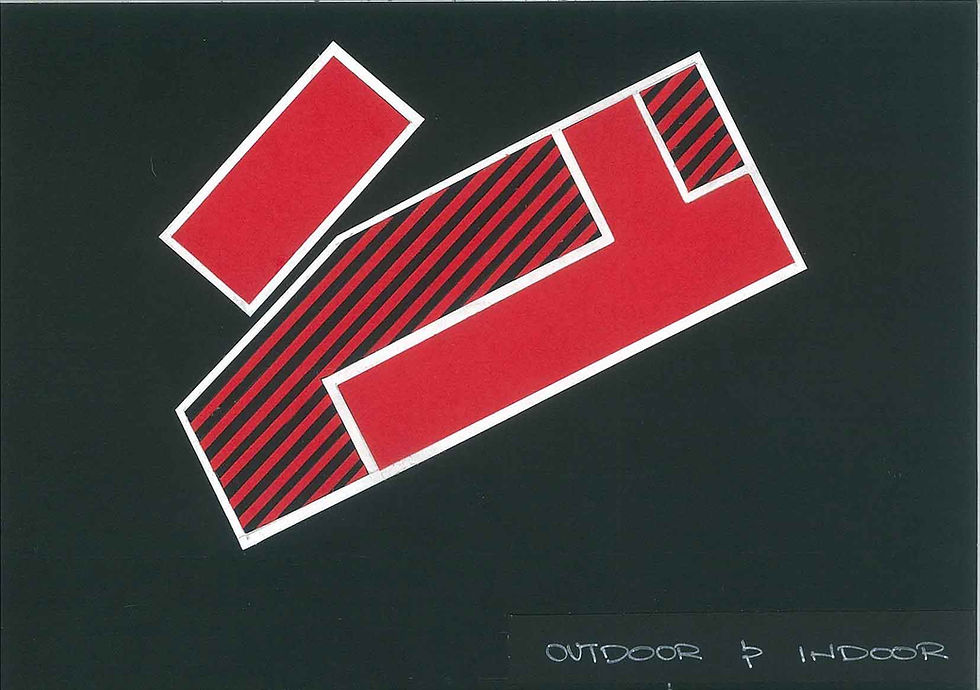

The model a representation of Rick Joy's Main feature of the house, The Courtyard

The model a representation of Rick Joy's Main feature of the house, The Courtyard

The model a representation of Rick Joy's Main feature of the house, The Courtyard
The model a representation of Rick Joy's Main feature of the house, The Courtyard
INTRODUCTION
For this project, we were assigned to exert ourselves on DIAGRAMMATIC ABSTRACTION by analyzing design concepts, design inspirations and design techniques of a particular architect unknown by most of the people. Rick Joy, an architect from Arizona, expert in designing poetic spaces and in framing views. His favourite types of sites are in the canyons and deserts of Arizona.
Our main objective was to do a complete analysis of one of his creations, the Tubac House, designed in 2000, by the use of postcards describing the different factors of the house according to the architect's approach.
TYPE OF PROJECT: Group of 5
OUR TASKS:
1. Video illustration narrating the biography and design approach of the Architect
2. Postcards illustrating the different elements and factors of the building.
LEARNING OUTCOMES
1. Acquiring the ability to identity famous architect's signature by their particular style.
2. Learning how to execute a more indepth analysis of a building in terms of concept, approach, techniques, and context.
3. Acquiring the ability to diagram and understand other architects' works.
4. Acquiring the ability to communicate design ideas in a more communicative and straight-forward way by the use of graphical methods instead of words.
5. Having a better understanding of Massing models and being able to indicate primary informations into a more conceptual modelling way.
PROJECT 2A: TEA FOR 2


At that stage of the semester, We were all introduced to site analysis. We were brought to Cameron Highlands and were assgined to analyze and study the site features,context and local resources which would enables us to execute designs based on the site context and atmosphere.
The analysis was more concerned about the Tea Culture in Cameron Highlands. So, the Architecture Students were to study the behaviour of the people around for Tea plantations and Tea industries.
After the site analysis, our first project was a group project, TEA FOR 2 and our first task as a team was to search for a TEA CULTURE different from the malaysian way of drinking tea. We chosed the PAKISTANI TEA CULTURE. The Tea culture of Pakistan may look similar to the tea cultures of a lot of British colonised countries but its culture is more about the way of sharing tea and the way of interracting with people.
My partner and myself we were amazed by the way the people's life functions according to their Tea traditions and culture. We inspired our designs from a quote narration the rural life in Pakistan because it is there that the essence of their tea culture itself was born.
The FIRST time you share tea with a balti, you are a stranger, the SECOND time you take tea you are an honoured guest, the THIRD time you share a cup of tea you become family.
- Greg Mortinson - Three Cups of Tea
THE DESIGN
First at the stage of research and analysis, our main aim was to focus on the function of the pavilion and to translate it based on the Pakistani Tea Culture.
We explored fluid shapes and geometric shapes, but what seems to be more was to create curvy shapes out of basic modular geometric shapes such as squares, trapeziums and rhombus.
Our design is a series of trapezium stacked into a vertical way creating the journey translated out of the quote by Greg Mortinson.
Space Translation:
In the surrounding of the pavilion you are a total STRANGER, going into the Tea sharing space makes you an HONOURED GUEST and accessing to the top of the spiral staircase makes you become FAMILY as you will be able to access the best part of Cameron Highlands, the VIEWS

THE DESIGN PROCESS


LEARNING OUTCOMES
1. Acquisition of the skills of designing within real sites
2. Better understanding of human proportion
3. Better understanding of concept vs context
4. Introduction to conceptual requirements and restrictions
PROJECT 2B: TEA HOUSE
The Tea House project is a continuity of Project 2a. For this project the objective is to translate the concept of the tea pavilion into a house. We were introduced to the art of designing functional spaces. We were to design a 150 meter square house for as much users as we wanted. My design is a house designed for a couple. The Concept of the house is based on the site context and the quote by Greg Mortinson.


LEARNING OUTCOMES
1. Acquisition of the skill of merging and composing spaces into one whole unit.
2. Better judgement in terms of design judgement such as where to put openings and walls.
3. A better understanding of site preservation and site blending designs- One must design the house with the site as the site will design itself from the site.
4. The importance of function over form was learned as FORM follows FUNCTION - Louis Henry Sullivan
